23/11/2026
Preparing Your Vehicle For Flooded Roads
Safe Water Wading Limits For Suzuki Models
The 15-Minute Flash Flood
A sudden afternoon downpour in the Caribbean can quickly turn a perfectly dry, familiar road into a rushing river in minutes. The number one cause of vehicle destruction isn’t wind or flying debris, but damage caused from misjudging the depth of a puddle. That’s why it’s important to know your vehicle’s specific water wading limit and better understand the technique for driving through water. That can be the difference between making it home safely or totaling your car.
What is Hydro-Locking?
Deep water doesn’t just get the interior wet, but can cause permanent damage to your vehicle's systems. You can avoid this by knowing your vehicle’s wading depth (the maximum depth a car can safely drive through at slow speeds). Otherwise, you risk hydro-locking. As the engine of your car requires air to breathe and function properly, when it becomes filled with water the pistons will violently halt, instantly bending engine rods and destroying the motor.
Know Your Vehicle’s Limits
The type of vehicle you’re driving heavily influences its ability to move through water, with a 4x4 having much better water fording than a hatchback:
| The off-road kings (Jimny) | The best Suzuki model for all sorts of off-road traversal is the Jimny, boasting a rigid ladder frame, high ground clearance, and elevated air intake, making it the best option for water crossings. |
| The Capable Crossovers (Grand Vitara, S-Cross, XL7) | These SUVs also provide excellent ground clearance, able to handle moderate flooding, deep roadside gutters, and heavy rain. Just don’t treat them like submarines. |
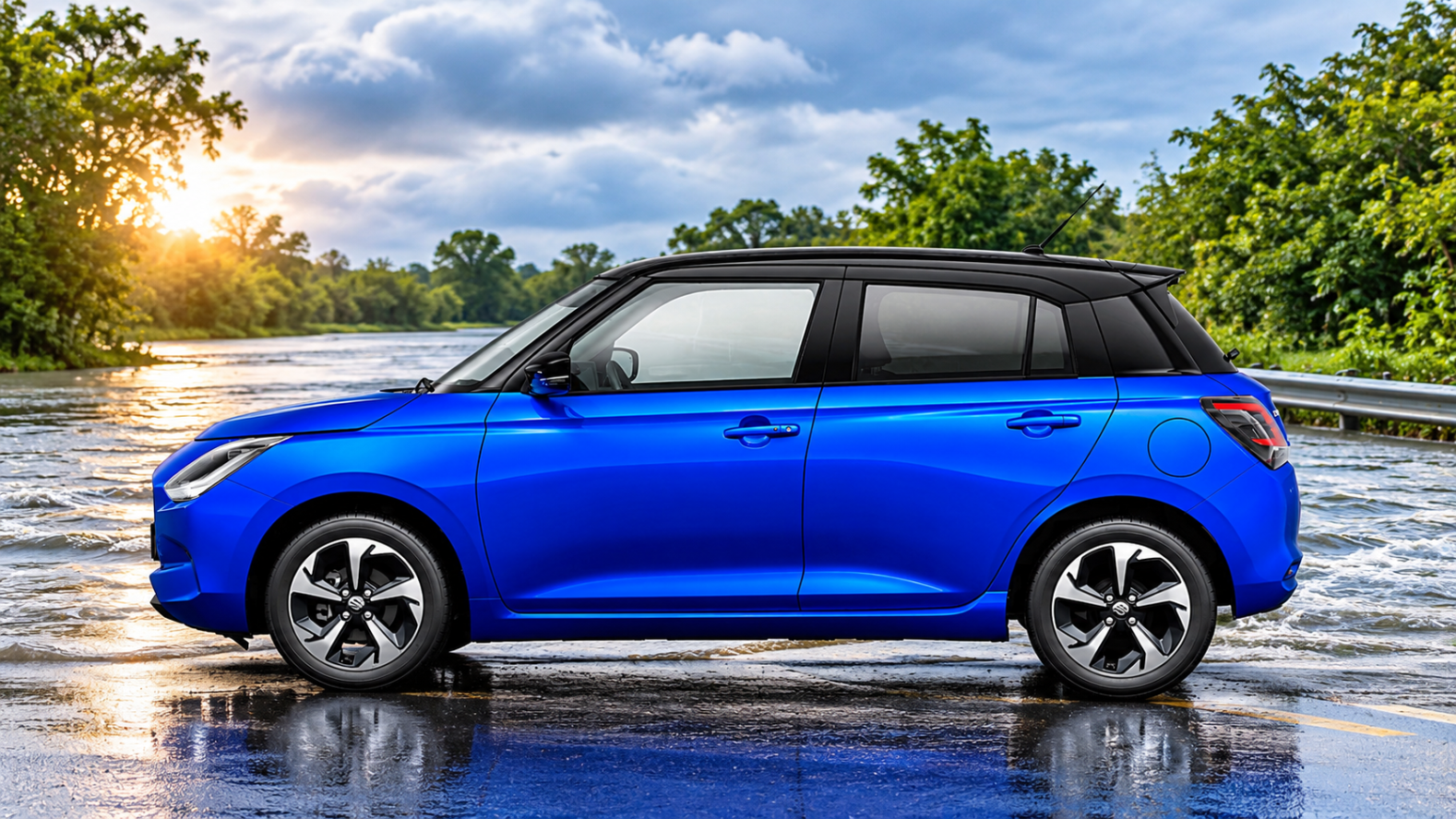
| The Urban Commuters (Swift, Baleno, Fronx) | While agile and efficient, compact vehicles sit lower to the ground, so if water gets higher than the center of the wheels it’s time to turn around. |
The Golden Rules of Water Wading
If you find yourself about to cross a flooded road section, make sure to follow these rules:
| Never Guess the Depth | Floodwater can hide massive, rim-destroying potholes or missing manhole covers in the Caribbean, so if you can’t see the bottom don’t bother. |
| The “Bow Wave” Technique | If you must, enter the water slowly, at a speed of around five kilometers per hour (three miles per hour), to push a small wave of water ahead of the front bumper. This creates a shallow trough inside the engine bay and keeps water away from the engine intake. |
| Maintain Momentum | Never stop in the middle of a puddle and don’t take your foot off the gas. If water enters the exhaust pipe while the engine’s off or idling too low, it can choke the engine. |
Post-Flood Vehicle Care
If your vehicle’s just been through deep water, there are a few things you should do immediately to make sure it can still function properly long-term:
- First, dry the brakes by lightly tapping them a few times on dry land while driving slowly to generate heat and evaporate trapped water on the brake rotors.
- Next, check the grille, removing any debris, leaves, or caught plastic bags that may have blocked the radiator.
- Lastly, wash the undercarriage. Floodwaters can often be mixed with corrosive seawater or backed up sewage, so this can prevent rusting.
Frequently Asked Questions About Driving in Flooded Roads
Remember: Safety First!
No vehicle is invincible, so if you’re unsure of the depth of a flash flood, just turn back. Make sure to check your owner’s manual for exact wading depths and please seek help from our service center for maintenance if you’re ever forced to drive through deep water. If you have any other questions about this subject, feel free to contact us online at Suzuki Caribbean.
