23/11/2026
Regenerative Braking on Island Hills
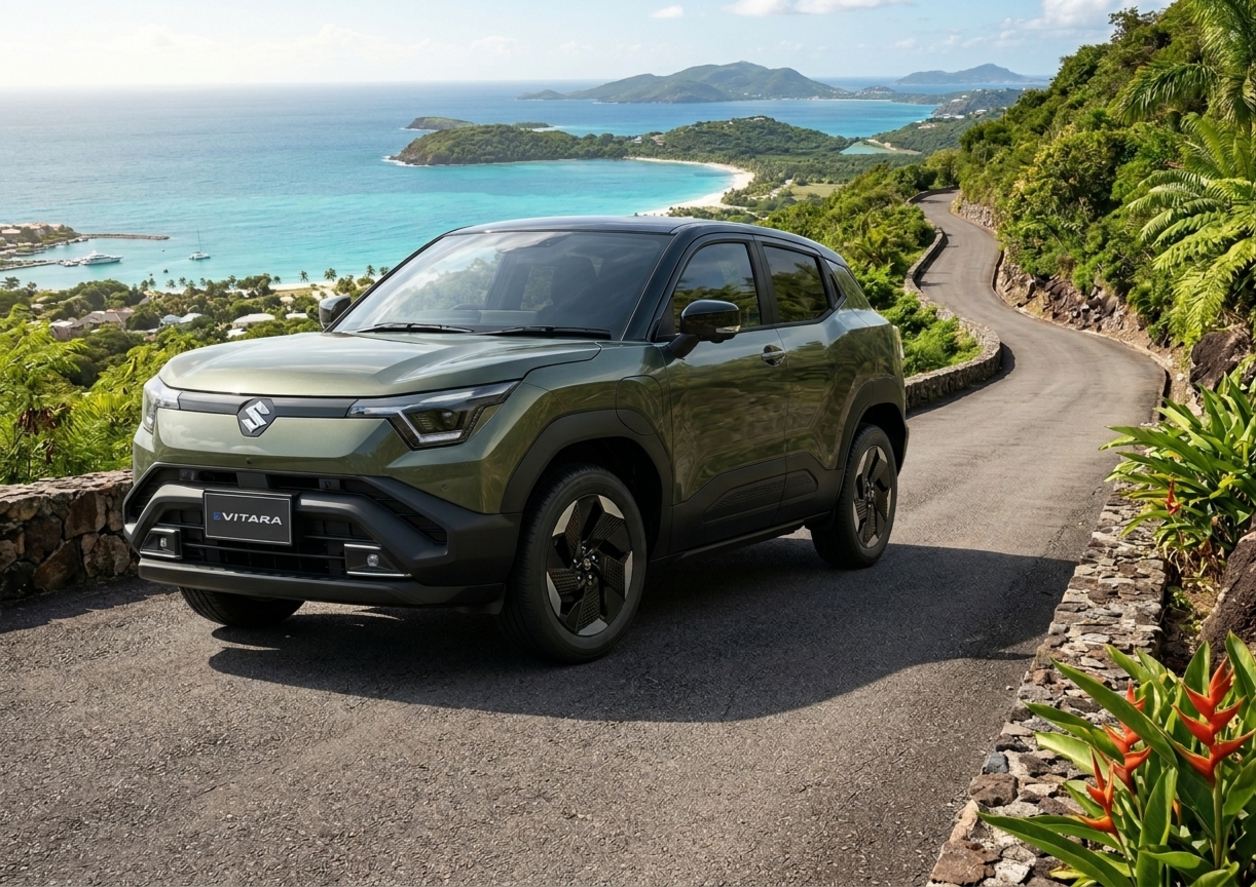
How Downhill Driving Recharges the Suzuki e-Vitara
The Mountain Pass Challenge
Whether you're navigating the Blue Mountains in Jamaica, the Northern Range in Trinidad, or the steep coastal hills of St. Lucia, driving downhill usually means riding your brakes. On traditional gas-powered vehicles, doing this means wasting momentum, overheating the brake pads, and literally burning up energy. However, when it comes to regenerative braking, the new Suzuki e-Vitara can capture that energy and turn it into usable energy for your vehicle to use, giving you “free” miles on your vehicle’s range.
The Science of Regenerative Braking
In a normal, gas-powered vehicle, pressing the brake pedal clamps physical brake pads onto a metal rotor, converting your kinetic energy into friction and heat which simply floats away into the air. However, with the e-Vitara, when you lift your foot off the accelerator, the electric motor instantly reverses its function. Instead of using electricity from the battery to spin the wheels, the forward motion of the wheels spins the motor. This turns the motor into a generator that takes that kinetic energy and puts it right back into the e-Vitara’s battery.
The “Engine Braking” Feel
Drivers in the Caribbean know that the safest way to descend a steep, wet hill in a manual transmission car is to use “engine braking”. This is shifting into low gear so the engine naturally slows the car down. Regenerative braking, itself, feels exactly like aggressive engine braking, giving the driver smooth control over the vehicle’s descent without the risk of overheating the brakes and being unable to stop the car.
The Hidden Financial Bonus: Saving Your Brake Pads
Not only does this system save you money on electricity and charging, but it also saves your brake pads. Because the electric motor’s magnetic resistance does 90% of the heavy lifting to slow the e-Vitara down, the physical brake pads are rarely used. This means less brake dust ruining your alloy wheels and significantly longer intervals between brake pad replacement trips to the service center.
Topography is Your Friend
The Suzuki e-Vitara isn’t just for surviving the Caribbean hills, but thriving on them! Get this EV for yourself at one of your local Suzuki dealers, or otherwise reserve one if they’re still on the way. Feel free to contact us online at Suzuki Caribbean if you have any other questions.
